Venue Microclimates and Surface Conditions Shift Performance Metrics in Outdoor Competitions
Parker Ludwig · Aug 5, 2026

Venue Microclimates and Surface Conditions Shift Performance Metrics in Outdoor Competitions
Outdoor athletic events unfold under layers of localized atmospheric and ground conditions that differ sharply from broader regional forecasts, and these variations reshape expected outcomes in measurable ways. Researchers tracking wind vectors inside enclosed arenas note that structures create pockets of turbulence and calm zones which alter ball trajectories and athlete effort levels. Surface moisture content, grass length, and material composition further compound these effects by changing friction coefficients and energy return rates during play.
Localized Atmospheric Patterns Inside Venues
Stadiums and open fields generate their own microclimates through interactions between architecture, topography, and prevailing winds. Data collected during major tournaments shows temperature gradients of up to four degrees Celsius between shaded stands and open pitch areas, while humidity levels fluctuate as air circulates around concrete barriers. Observers note that these differences become pronounced during afternoon sessions when solar heating peaks, and they directly influence hydration demands plus muscle response times for competitors.
Wind behaves unpredictably around seating tiers and scoreboards. Studies from the Australian Bureau of Meteorology reveal that gusts can intensify or dissipate within fifty meters of a playing surface depending on wind direction relative to venue orientation. Athletes in events such as discus and javelin experience altered release angles and distances under these conditions, while ball sports see changes in spin decay and flight paths that deviate from standard probability models based on open-field assumptions.
Ground Surface Variables and Their Measurable Effects
Playing surfaces respond dynamically to temperature, precipitation, and maintenance practices. Clay courts retain moisture longer than hard courts after light rain, producing slower ball speeds and higher bounce consistency that shift rally length distributions. Grass fields cut to different heights alter foot grip and slide distances in sports like soccer and rugby, with researchers documenting measurable reductions in sprint acceleration when dew accumulates overnight.
Artificial turf systems introduce additional complexity through heat retention and drainage characteristics. Temperature readings taken on synthetic pitches in August 2026 during European tournaments reached surface levels twelve degrees above ambient air temperature, increasing fatigue rates among players during extended matches. Maintenance crews adjust watering schedules to counteract these spikes, yet residual variations still appear in performance statistics tracked across multiple venues.
Integration With Probability Frameworks
Bookmakers and analysts incorporate venue-specific data into models because standard meteorological inputs overlook micro-scale deviations. Performance databases reveal that serve success rates in tennis drop by three to seven percent on courts with elevated humidity when combined with light crosswinds, while long-jump distances shorten under headwinds channeled by surrounding grandstands. These adjustments propagate through live probability calculations as events progress and conditions evolve.
Coaches and statisticians compile historical venue profiles that account for seasonal surface changes and typical wind corridors. One analysis of golf tournaments across coastal and inland sites demonstrated that scoring averages differed by nearly two strokes per round when comparing venues with similar regional climates but distinct microclimate signatures. Such patterns emerge consistently enough that probability engines now weight recent venue data more heavily than generalized weather forecasts.
Documented Cases Across Disciplines
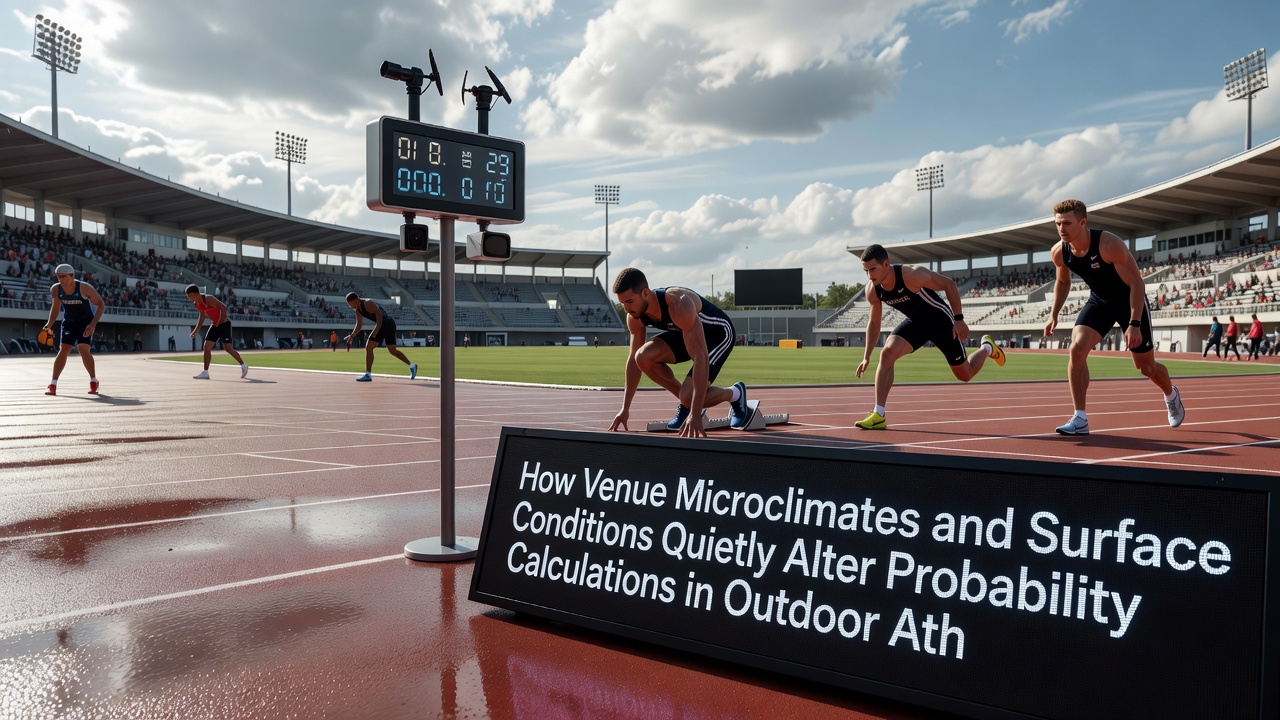
Track and field meets provide clear illustrations. At facilities with adjacent tree lines or hills, recorded wind readings at the track surface often diverge from official anemometer data placed at regulation height, leading to adjustments in recorded performances for events sensitive to tailwinds. Marathon courses through urban corridors experience temperature inversions near water bodies and building clusters that affect pacing strategies in later stages.
Team sports demonstrate parallel impacts. Soccer matches played on recently irrigated pitches show higher pass completion percentages in midfield zones where moisture reduces erratic bounces, whereas drier perimeter areas produce more turnovers. Observers tracking rugby union fixtures note that scrum stability metrics shift when forward packs encounter varying grass density caused by shade patterns from stadium roofs.
Conclusion
Venue microclimates and surface conditions operate as persistent modifiers within outdoor athletic probability structures. Data from meteorological agencies, university research programs, and performance analytics groups confirm that these factors produce repeatable deviations from baseline expectations. Analysts continue refining models to capture these localized influences because they accumulate across competitions and alter outcome distributions in measurable, systematic ways.