Statistical Benchmarks Guiding Adjustments Across Golf Tournaments and Boxing Rings
Avery Patterson · Jun 15, 2026
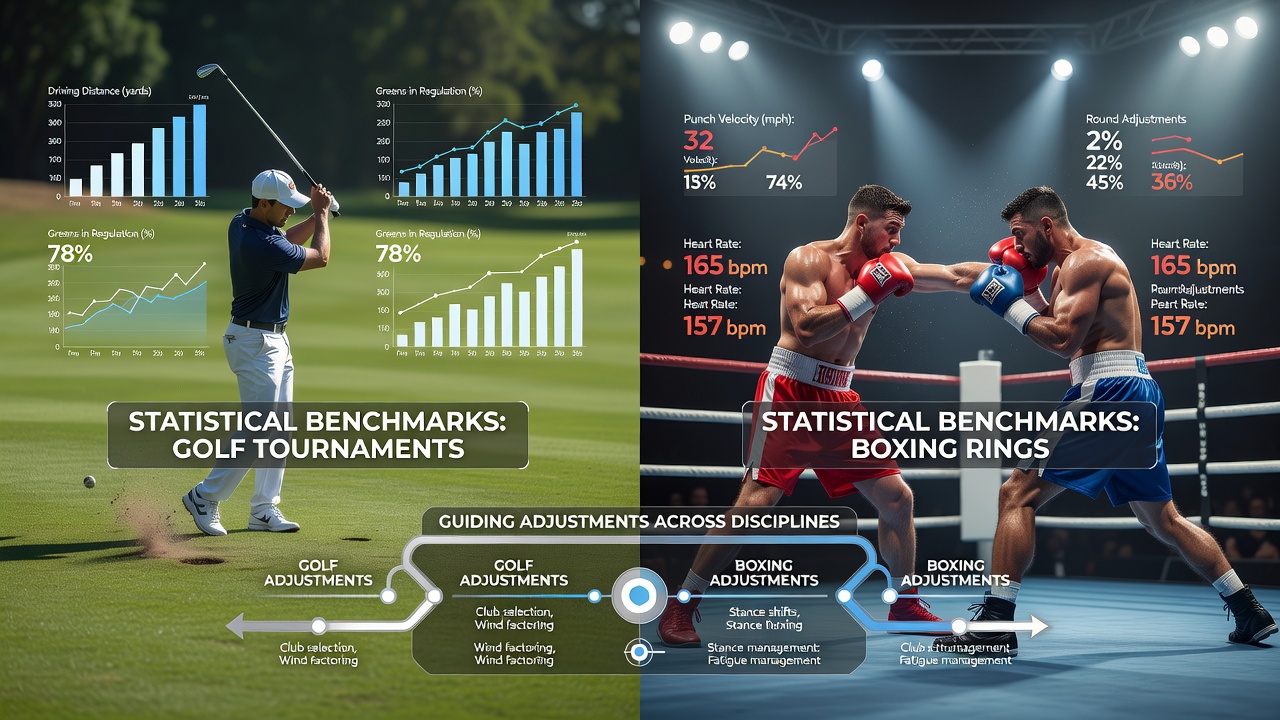
Statistical Benchmarks Guiding Adjustments Across Golf Tournaments and Boxing Rings
Analysts track performance indicators like strokes gained and average driving accuracy to recalibrate lines during major golf events while boxing observers monitor punch connection rates along with defensive metrics that prompt rapid shifts in round totals and winner props. These benchmarks draw from historical datasets compiled across thousands of rounds and bouts then feed into models that update probabilities as conditions evolve on the course or in the ring. Events in June 2026 highlighted this process when several European golf opens saw real-time line movements tied directly to updated driving distance averages after morning rounds concluded and similar patterns emerged in boxing cards where cumulative punch volume data triggered adjustments before later rounds began.Golf Tournament Benchmarks and Line Updates
Strokes gained categories break down player contributions across tee-to-green segments and putting which allows oddsmakers to refine over-under totals on specific holes or entire rounds as play progresses. Data from the 2025 PGA Tour season revealed that players averaging above 1.2 strokes gained per round on approach shots produced measurable impacts on tournament finishing positions and those figures carried forward into early 2026 majors where bookmakers applied the same thresholds for live wager recalibrations.
Weather variables combine with these benchmarks since wind-adjusted scoring averages from prior events help predict scoring ranges and prompt initial line tweaks before tee times start. Observers note that when a field posts driving accuracy below 55 percent on a given day the expected score for the field rises accordingly and live markets reflect that shift within minutes of updated statistics appearing from on-course tracking systems.
Boxing Ring Metrics Driving Prop Adjustments
Punch accuracy percentages and ring generalship scores serve as primary inputs for boxing round props and fight winner odds with analysts pulling from CompuBox-style compilations that quantify landed strikes per minute. In bouts where fighters maintain connection rates above 35 percent across the first three rounds the probability models shift toward higher over totals on subsequent rounds and this pattern held steady through several high-profile cards held in the first half of 2026.
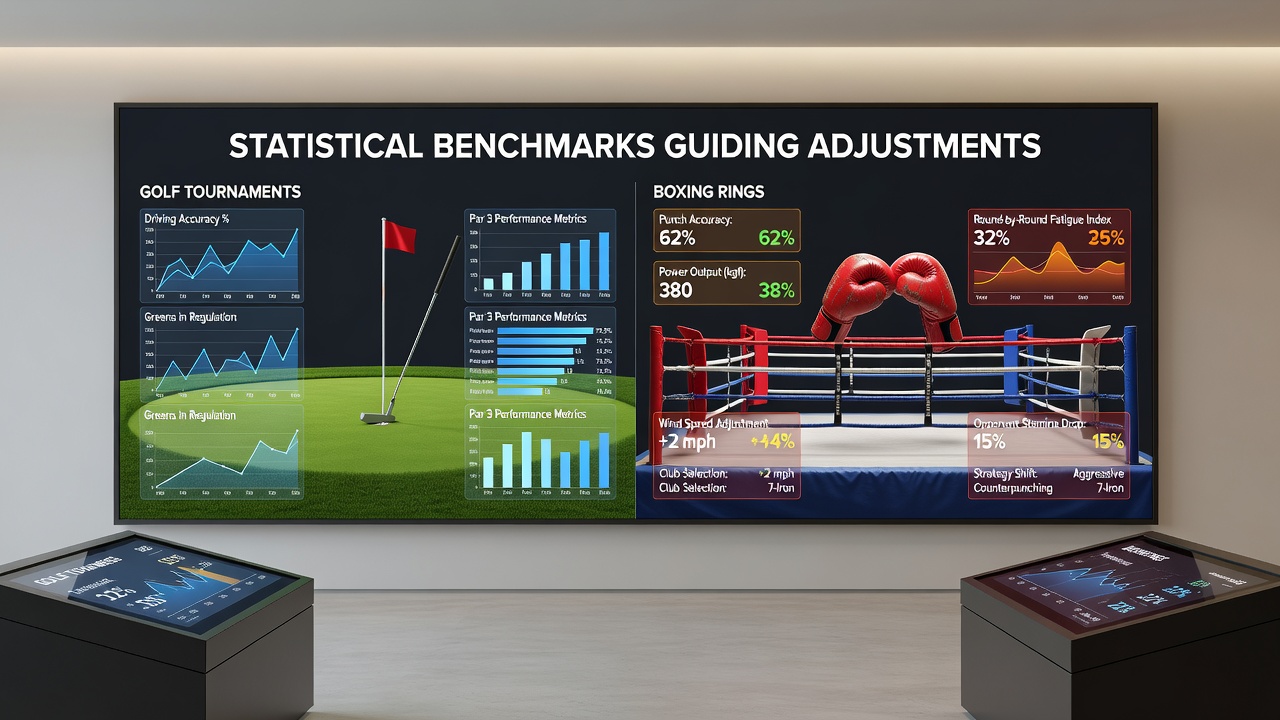
Knockdown frequency data from the past five years of professional bouts further guides underdog pricing because fighters who absorb more than two knockdowns per ten rounds show elevated loss probabilities in extended contests. Those historical benchmarks integrate with current fight telemetry so that when a fighter exceeds expected punch output by 20 percent the market responds with immediate adjustments to method-of-victory props.
Integration of Cross-Sport Data Patterns
Both sports rely on normalized benchmarks that account for venue-specific factors such as course length in golf or ring size in boxing yet the underlying principle remains consistent across platforms. Research from the American Statistical Association on sports performance modeling demonstrates how rolling averages of key metrics reduce variance in live probability estimates and this approach appears in both golf tournament software and boxing analytics feeds used by operators.
European data providers supply additional context through aggregated tournament archives that allow comparisons between current fields and historical benchmarks which in turn support finer adjustments during live play. A 2024 study published by the Sports Science Institute of South Africa examined endurance metrics across combat and individual sports and found parallel fatigue curves that inform late-stage line movements in both golf final rounds and boxing championship rounds.
Real-Time Application in June 2026 Events
During the June 2026 European swing several golf tournaments displayed rapid line movements after the first two rounds when strokes-gained putting averages deviated more than 0.8 from player norms and boxing events on the same weekend showed corresponding updates to total rounds props once cumulative strike data exceeded modeled thresholds. These adjustments occur through automated systems that ingest live feeds and apply weighted historical benchmarks without manual intervention in most cases.
Regional variations exist because North American operators tend to emphasize power metrics in boxing while European platforms place greater weight on accuracy and volume which leads to slightly different line responses under identical fight conditions. Golf follows similar regional weighting with Asian events often prioritizing driving distance benchmarks more heavily than European opens.
Conclusion
Statistical benchmarks continue to anchor live adjustments across golf tournaments and boxing rings through consistent application of historical performance data and venue-adjusted models. The process relies on transparent inputs such as strokes gained categories and punch accuracy rates that update continuously as events unfold and this framework supports precise probability recalibrations for operators and bettors alike. Future refinements will likely incorporate additional sensor data from wearables yet the core methodology of benchmark comparison remains unchanged.