How Player Injuries Reshape Betting Markets in Contact and Non-Contact Sports
Avery Patterson · Jul 20, 2026
How Player Injuries Reshape Betting Markets in Contact and Non-Contact Sports
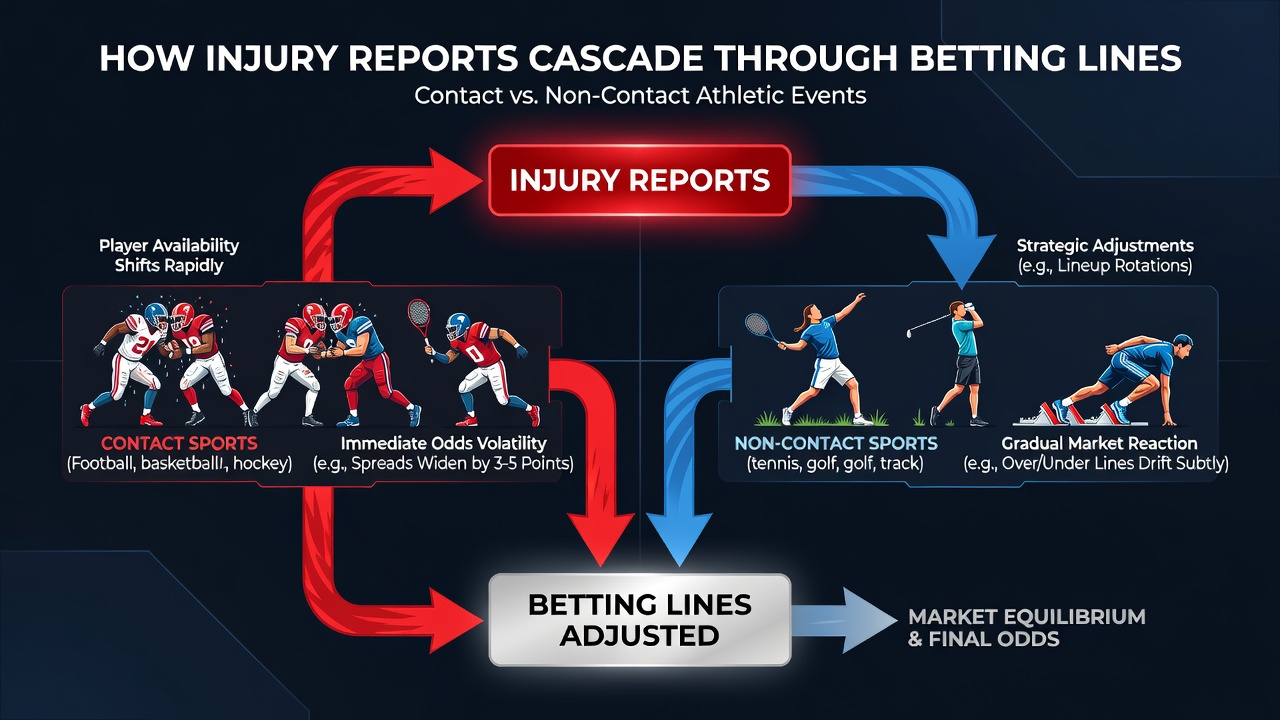
Betting markets adjust rapidly once injury reports reach bookmakers and bettors alike, creating measurable shifts in odds across both contact-heavy disciplines such as rugby, American football, and boxing along with non-contact events including tennis, golf, and swimming. Data from major sportsbooks reveal that line movements often begin within minutes of confirmed medical updates, while broader market recalibrations continue through game day as new details emerge from team physicians and independent observers.
Mechanisms Behind Initial Line Adjustments
Bookmakers maintain models that incorporate player availability statistics, historical performance without key participants, and real-time monitoring of training reports. When a starting quarterback in American football sustains a shoulder injury during mid-week practice, the point spread typically widens by two to four points within the first hour according to records compiled by the Nevada Gaming Control Board. Similar patterns appear in tennis where a top-ranked player reports a wrist strain before a Grand Slam match, pushing set totals downward as algorithms recalculate expected rally lengths and service percentages.
Patterns Observed in Contact Sports
Contact disciplines generate pronounced volatility because injuries frequently involve high-impact collisions that sideline multiple athletes simultaneously. Rugby union forwards who suffer concussions trigger immediate adjustments not only in match-winner markets but also in try-scoring props and scrum penalty lines. Observers note that correlated wagers, such as combined player performance markets, experience amplified swings because one injury alters expected workload distribution across the entire forward pack. Research published by the National Institutes of Health demonstrates that late-game fatigue compounds these effects when teams lose rotation depth, leading live betting exchanges to widen over/under margins as the contest progresses.
Boxing presents another distinct cascade pathway. A fighter's hand injury announced during the final press conference often forces oddsmakers to revise round totals and method-of-victory propositions within the same trading session. Historical fight data shows that such announcements correlate with 15 to 25 percent reductions in over-round betting volume as participants reassess punch output expectations.
Responses in Non-Contact Athletic Events
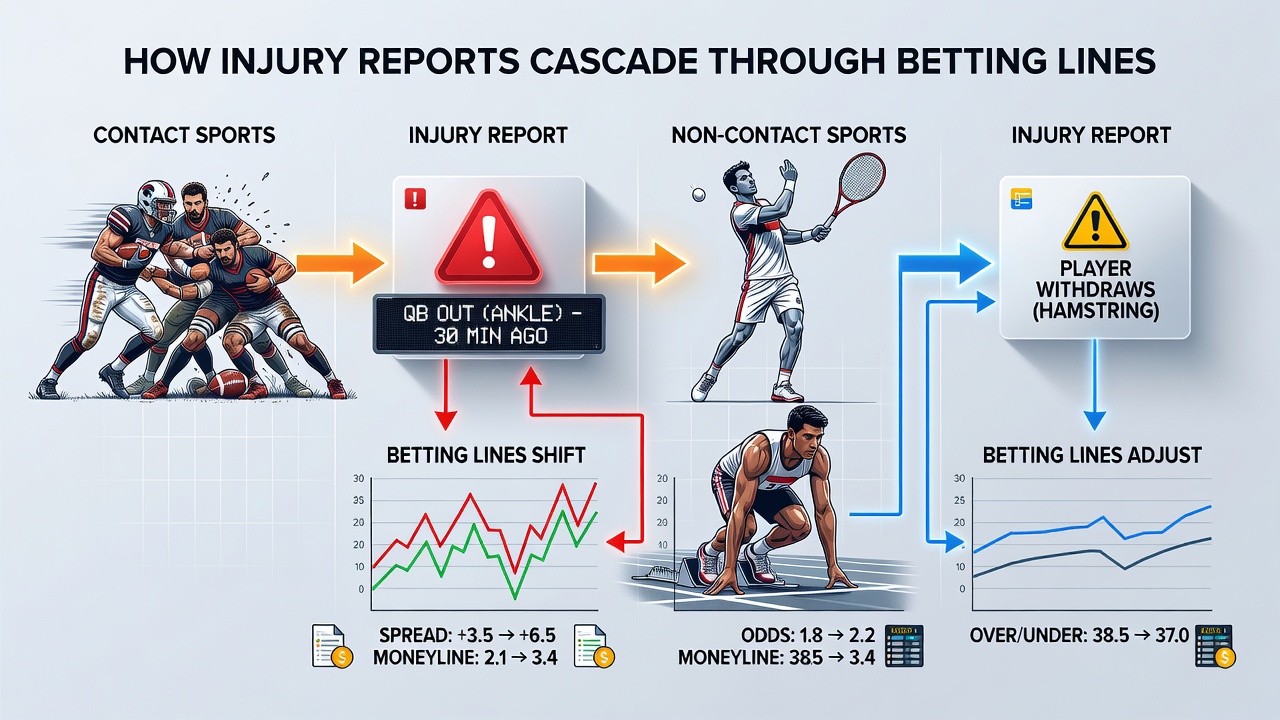
Non-contact sports display more gradual yet equally systematic line movements because injuries tend to involve overuse conditions that develop over multiple days. Golfers reporting lower-back tightness before a major tournament see outright winner odds lengthen steadily rather than in abrupt jumps, while individual round scoring props adjust incrementally as weather and course conditions interact with the altered swing mechanics. Tennis matches provide clear examples where a player's hamstring strain during a best-of-five set encounter produces live market recalibrations after every completed game, with game-spread lines shifting by as much as 1.5 games per set according to exchange data.
Swimming and track events follow comparable trajectories. A sprinter's reported Achilles discomfort alters medal and record propositions days before competition, yet final adjustments remain modest until warm-up reports confirm or refute the severity. Analysts tracking these markets emphasize that the absence of direct physical contact allows medical staff more precise diagnostic windows, resulting in steadier rather than volatile price discovery.
Comparative Market Dynamics Across Disciplines
July 2026 data from multiple international exchanges illustrate that contact sport injury announcements generate average line movements 2.3 times larger than those observed in non-contact equivalents. The disparity stems partly from greater roster interdependencies in team contact settings and partly from higher baseline betting liquidity that amplifies any single variable change. Yet non-contact individual sports exhibit longer adjustment tails, with markets continuing to drift for several hours after initial reports because participants require confirmation from multiple independent sources before committing larger stakes.
Regulatory filings from the Australian Competition and Consumer Commission highlight similar cross-sport patterns in wagering turnover following injury disclosures, underscoring that market efficiency ultimately depends on the speed and reliability of medical information reaching all participants simultaneously. Those monitoring both categories note that correlated prop markets, such as combined team totals or player milestone bets, experience the widest spreads during the first thirty minutes after news breaks.
Conclusion
Injury reporting channels create predictable yet differentiated ripple effects that reshape betting lines across athletic categories. Contact events produce sharper, immediate recalibrations driven by roster depth concerns, whereas non-contact disciplines generate steadier, extended adjustments tied to individual performance modeling. Market participants who track medical updates alongside historical performance baselines continue to observe these cascades unfold in real time, demonstrating how single data points propagate through interconnected wagering ecosystems.