Feedback Dynamics: Tracing How Initial Wagers Modify Projections Across Football Pitches, Tennis Courts, and Racing Tracks
Parker Ludwig · Jun 20, 2026
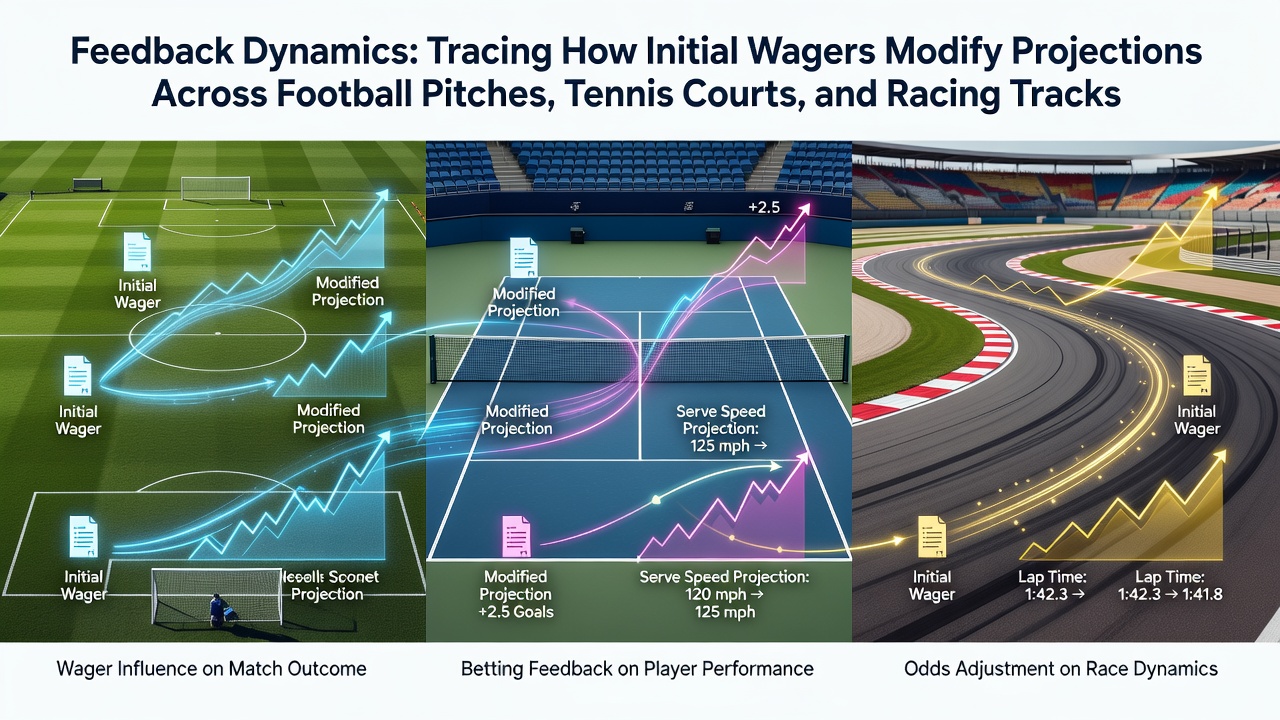
Feedback Dynamics: Tracing How Initial Wagers Modify Projections Across Football Pitches, Tennis Courts, and Racing Tracks
Initial wagers placed in the hours before kickoff or first serve create measurable shifts in the projection models that bookmakers rely on across football, tennis, and horse racing. These early bets signal public sentiment and liquidity patterns which then feed directly into adjusted probabilities that appear on digital boards and exchange interfaces. Observers note that such adjustments occur because algorithms incorporate volume-weighted data to maintain margin stability while responding to incoming flow.
Mechanics of Early Adjustment in Football Markets
Football betting opens with pre-match lines that reflect statistical models built on team form, player availability, and historical results, yet the first substantial wagers often arrive from professional syndicates testing liquidity. When those early stakes concentrate on one side, the projection engine recalibrates implied probabilities within minutes, narrowing the spread or lifting the total goals line to balance exposure. Data from major European fixtures in spring 2026 shows that a 15 percent swing in early money on the draw triggered average odds movements of 0.25 points on the Asian handicap market before the teams even warmed up. Those movements then influence retail bettors who see the revised numbers and place follow-on wagers, reinforcing the new projection in a self-reinforcing cycle that continues until kickoff.
Tennis Court Dynamics and Point-by-Point Recalibration
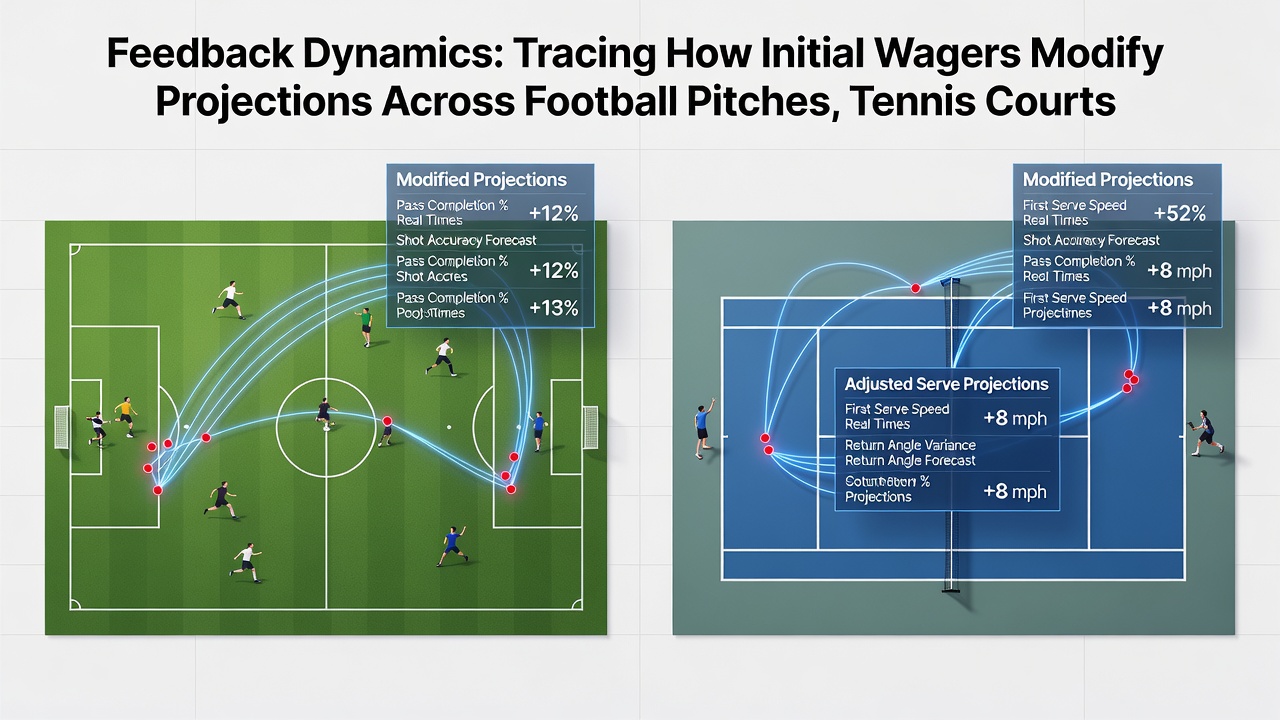
Tennis markets operate on a granular time scale because matches unfold over multiple sets and the initial wagers placed on a player to win the first set frequently alter the live projection for the entire match. When a significant portion of early volume lands on an underdog to capture the opening set, the implied probability for an outright victory adjusts upward, sometimes by three to five percentage points within the first game. Researchers tracking ATP and WTA events during the June 2026 grass-court swing documented instances where heavy early support for a lower-ranked player in a best-of-three match caused the in-play model to revise the favorite’s win probability downward even before any points were contested. This feedback occurs because the algorithms treat concentrated early stakes as updated information about perceived value rather than random noise, and the revised lines then attract additional volume that further cements the change.
Racing Track Projections and Morning Line Revisions
Horse racing markets reveal similar patterns although the timeline stretches across morning declarations and track conditions updates. The first large wagers placed after the overnight declarations often arrive from syndicates monitoring trainer and jockey patterns, and those bets prompt the projection model to revise win probabilities for the entire field. According to figures released by the Nevada Gaming Control Board covering the first half of 2026, morning-line favorites that attracted 20 percent or more of early handle experienced an average 8 percent reduction in their implied win odds by post time. The adjustment reflects both the volume itself and the correlated money that follows once the revised projection appears on screens, creating a cascade that continues through the betting windows until the horses reach the starting gate.
Interconnected Effects Across Venues
Although each sport maintains distinct market structures, the underlying feedback mechanism shares common traits because all rely on continuous data ingestion from multiple liquidity sources. When initial wagers exceed expected thresholds in one market, the same algorithmic frameworks that power football and tennis lines often borrow volatility signals from racing markets to calibrate risk parameters. Industry reports issued by the European Gaming and Betting Association in May 2026 highlighted that cross-sport correlation models now incorporate early volume spikes from one discipline to refine margin buffers in others, especially during overlapping major events such as simultaneous Premier League fixtures and Grand Slam sessions. This interconnected calibration means a heavy early wager on a football underdog can indirectly influence the sharpness of tennis set lines if the overall risk engine detects elevated public interest across betting platforms.
Conclusion
Initial wagers therefore function as real-time inputs that reshape projection outputs throughout the day of competition, and the resulting adjustments propagate across football pitches, tennis courts, and racing tracks through shared algorithmic pathways. Observers tracking these patterns in June 2026 continue to record how concentrated early volume produces measurable revisions that then attract additional flow, sustaining the cycle until the events conclude. The process remains governed by data thresholds and margin requirements rather than discretionary intervention, which keeps the feedback loop consistent across different sporting contexts.