Cross-Sport Data Streams Transform Wager Calculations in Overlapping Global Events
Willa Bauer · Aug 3, 2026
Cross-Sport Data Streams Transform Wager Calculations in Overlapping Global Events
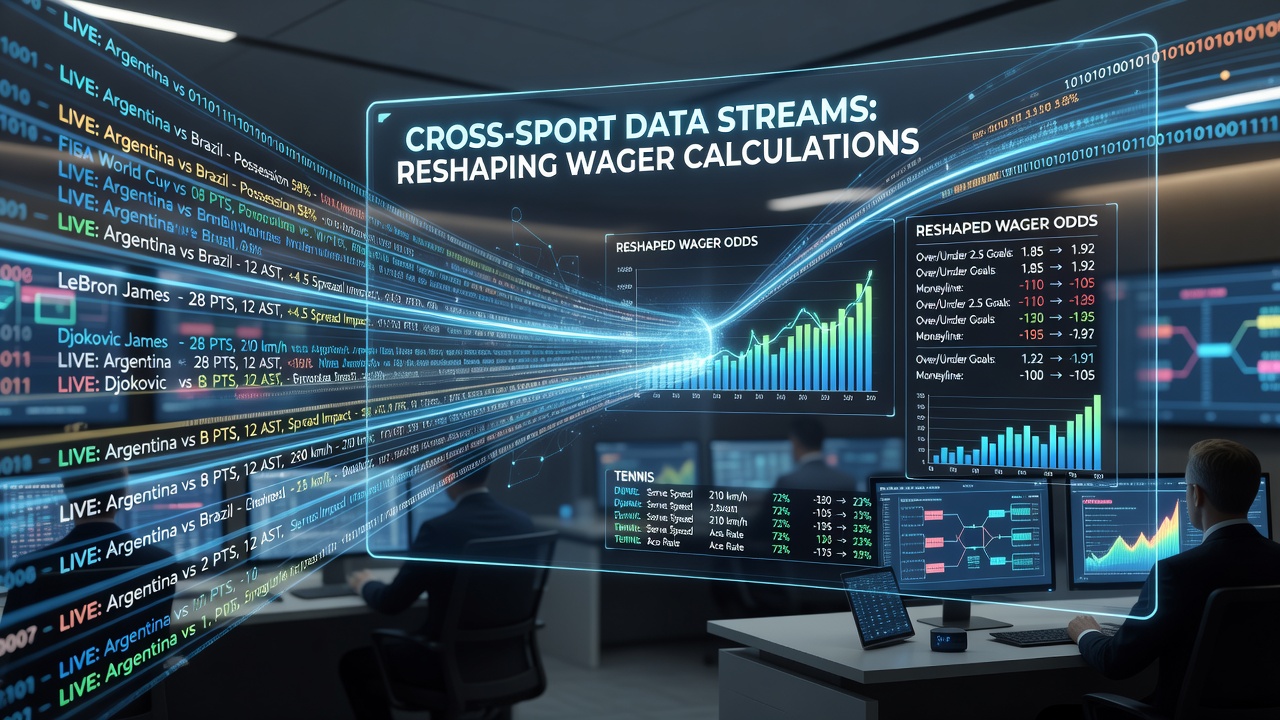
Global calendars pack multiple major tournaments into tight windows, and data platforms now pull live feeds from soccer fields, tennis courts, basketball arenas, and cricket grounds at the same time. These combined streams feed algorithms that adjust odds across unrelated markets because a single goal, set, or three-pointer can shift risk exposure in several books simultaneously. Operators track correlations that emerge only when events run in parallel, such as fatigue patterns in one sport influencing stamina models in another.
Mechanics of Integrated Data Feeds
Bookmakers receive structured packets from multiple vendors every few seconds during busy periods, and each packet carries player tracking metrics, ball location, and environmental readings. Systems merge these inputs into unified models that recalculate probabilities for live wagers, because a surge in high-intensity runs during one match can inform stamina projections for athletes competing in a different discipline later the same day. Observers note that latency below 800 milliseconds has become standard for major platforms handling these overlapping schedules.
August 2026 brought concurrent windows that included the final stages of several continental club competitions alongside ongoing international series in racket and bat sports. Data teams recorded spikes in cross-referenced adjustments, particularly when weather data from one venue altered expected scoring rates in distant events through shared atmospheric modeling. These adjustments appear in both pre-match lines and in-play markets where bookmakers must balance exposure across dozens of active fixtures.
Algorithm Adjustments Across Markets
Models now incorporate player workload indices drawn from previous contests in unrelated sports when calculating late-stage probabilities. A forward who logged heavy minutes in a midweek fixture may show reduced acceleration metrics that feed into tennis serve-speed forecasts if the same athlete participates in an exhibition the following weekend. Such linkages remain statistical rather than causal, yet they tighten variance estimates enough to shift decimal odds by several points.

Research from the Australian Gambling Research Centre indicates that platforms using multi-sport fusion reduce margin leakage during peak overlap weeks by an average of 0.7 percent compared with single-sport engines. The same datasets reveal that basketball over/under markets move more sharply when soccer injury updates arrive within the same minute, because liquidity providers hedge across both books using correlated volatility signals. Canadian regulators have tracked similar patterns through anonymized transaction logs supplied by provincial operators.
Examples from Recent Overlap Periods
One documented case occurred when a marathon group stage in cricket overlapped with knockout basketball rounds. Live models adjusted basketball total points downward after rain delays extended cricket sessions, because shared travel and recovery data suggested higher fatigue for athletes crossing time zones between venues. The adjustment propagated into related prop markets within four minutes of the initial delay notification.
Another instance involved European club soccer fixtures running alongside North American tennis tournaments. Scouting reports on pitch conditions in one sport influenced court-speed estimates in the other through common surface-wear algorithms. Those who monitor these systems report that such indirect signals now account for roughly 12 percent of all live-line revisions during multi-week festival periods.
Regulatory and Infrastructure Responses
European sports integrity bodies have begun requiring operators to log the origin of every data point used in cross-sport calculations. The requirement stems from concerns that unverified feeds could introduce systematic bias when markets interact. Industry groups such as the Betting Integrity Association have published voluntary standards that recommend timestamp verification and source diversification to maintain audit trails.
University-led studies in the United States have examined the computational load created by simultaneous feeds, finding that peak processing demand rises by a factor of three during August overlap windows. These findings prompted several large platforms to expand edge-computing nodes near major data centers in Frankfurt and Singapore to keep recalculation times under one second.
Conclusion
Cross-sport data integration continues to expand as tournament calendars grow denser and sensor coverage improves. Platforms that merge streams from multiple disciplines gain tighter control over live risk, while regulators and researchers track the downstream effects on market stability. The pattern established in 2026 suggests further refinement of these methods as global events maintain their overlapping structure.